
Chevrolet Sonic Owner's Manual: Engine Heater
The engine heater can provide easier starting and better fuel economy during engine warm-up in cold weather conditions at or below −18°C (0°F). Vehicles with an engine heater should be plugged in at least four hours before starting.
1. Turn off the engine.
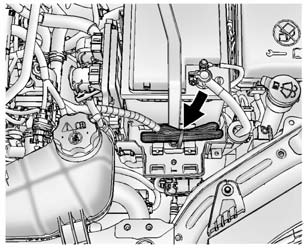
2. Open the hood and unwrap the electrical cord. The cord is located in the driver side of the engine compartment, near the battery. It is shipped from the factory with a tie holding it in place. Use care in removing the tie so that the cord is not damaged.
3. Plug it into a normal, grounded 110-volt AC outlet.
Warning
Plugging the cord into an ungrounded outlet could cause an electrical shock. Also, the wrong kind of extension cord could overheat and cause a fire. You could be seriously injured. Plug the cord into a properly grounded three-prong 110-volt AC outlet. If the cord will not reach, use a heavy-duty three-prong extension cord rated for at least 15 amps.
4. Before starting the engine, be sure to unplug and store the cord as it was before to keep it away from moving engine parts. If you do not it could be damaged.
The length of time the heater should remain plugged in depends on several factors. Ask a dealer in the area where you will be parking the vehicle for the best advice on this.
 Starting Procedure
1. With your foot off the accelerator pedal, turn the ignition to START. When
the engine cranks, let go of the key. The idle speed will go down as the engine
gets warm.
The vehicle has a Computer ...
 Retained Accessory Power (RAP)
These vehicle accessories may be used for up to 10 minutes after the engine is
turned off:
Audio System
Power Windows
Sunroof
The power windows and sunroof will continue to work for up to ...
Other materials:
Front Floor Console Bracket Replacement
Front Floor Console Bracket Replacement
Callout
Component Name
Preliminary Procedure
Remove the left front floor console extension panel. Refer to Front Floor
Console Extension Replacement - Left Side.
1
...
Engine Mount Bracket Replacement - Right Side
Engine Mount Bracket Replacement - Right Side
Callout
Component Name
Preliminary Procedures
Remove the engine mount. Refer to Engine Mount Replacement - Right
Side.
Remove the front wheelhouse front liner if necessary. Re ...
Engine Front Cover and Oil Pump Assemble
Oil Pump Installation
Note: The oil pump slide spring and pin, as well as the slide
seal and slide seal spring can be ordered as single parts. All other
oil pump components can only be ordered as a replacement kit.
Install the oil pump components in the fo ...

0.0069