
Chevrolet Sonic Repair Manual: Rear Spring, Insulator, and Jounce Bumper Replacement
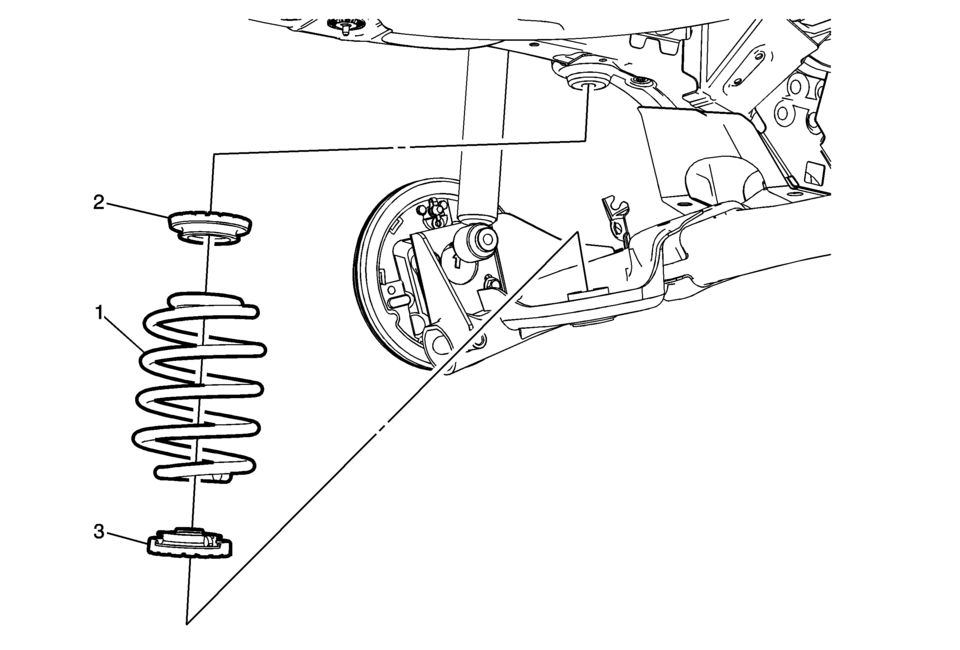
|
Callout |
Component Name |
|---|---|
|
Preliminary Procedure
Raise and support the vehicle. Refer to Lifting and Jacking the Vehicle. |
|
|
1 |
Rear Spring Procedure
|
|
2 |
Upper Rear Spring Insulator Tip: Ensure that the rear spring insulator is properly seated in the rear frame rail. |
|
3 |
Lower Rear Spring Insulator Tip: Ensure that the rear spring insulator is properly seated in the rear axle. |
 Ball Joint Inspection
Caution: Refer to Vehicle Lifting and Jacking Caution.
Raise the front of the vehicle to allow the front suspension to hang free.
Grasp the tire at the top and the bottom.
Move the ...
 Rear Compartment Lid Hinge Torque Rod Replacement
Rear Compartment Lid Hinge Torque Rod Replacement
Callout
Component Name
Warning: Refer to Hood Hold-Open Device Warning.
...
Other materials:
Liftgate
To lock or unlock the liftgate from the inside, press
or
on the central locking switch or on
the driver door switch.
The vehicle must be in P (Park) for automatic transmissions. For manual transmissions
the parking brake must be engaged.
To open the liftgate from the outside, press
twi ...
Rear Side Door Upper Rear Trim Panel Replacement (Hatchback)
Rear Side Door Upper Rear Trim Panel Replacement
Callout
Component Name
1
Rear Side Door Upper Rear Trim Panel Assembly
Procedure
Pull the door upper rear trim panel away from the rear side door.
...
Engine Replacement (Manual Transmission)
Special Tools
J-45859 Wheel Drive Shaft Remover .
CH-807 Closure Plugs .
For equivalent regional tools, refer to Special Tools.
Removal Procedure
Remove the battery and battery tray. Refer to
Battery Tray Replacement.
Relieve the fuel system pressure. Refer to
...

0.0053