
Chevrolet Sonic Owner's Manual: Dinghy Towing All except RS Model with Automatic Transmission
When dinghy towing a vehicle with an automatic transmission, the vehicle should be run at the beginning of each day and at each RV fuel stop for about five minutes. This will ensure proper lubrication of transmission components.
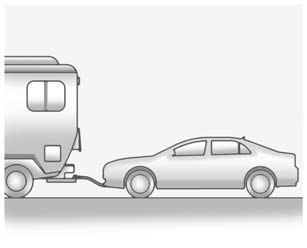
To dinghy tow the vehicle from the front with all four wheels on the ground:
1. Position the vehicle to tow and then secure it to the towing vehicle.
2. Shift the automatic transmission to P (Park) or a manual transmission into 1 (First) gear and turn the ignition to LOCK/OFF.
3. Set the parking brake.
4. To prevent the battery from draining while the vehicle is being towed, remove the following fuse from the instrument panel fuse block: (DLIS). See Instrument Panel Fuse Block for more information.
5. Turn the ignition to ACC/ ACCESSORY.
6. Shift the automatic transmission to N (Neutral) or a manual transmission to Neutral.
7. Release the parking brake.
Remember to reinstall the DLIS fuse once the destination has been reached.
Caution
If 105 km/h (65 mph) is exceeded while towing the vehicle, it could be damaged. Never exceed 105 km/h (65 mph) while towing the vehicle.
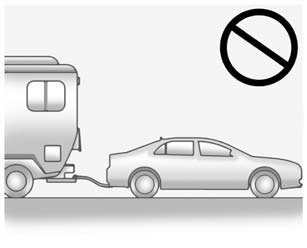
Caution
Towing the vehicle from the rear could damage it. Also, repairs would not be covered by the vehicle warranty. Never have the vehicle towed from the rear.
 Dinghy Towing RS Model with Automatic Transmission
Caution
If the vehicle is towed with all four wheels on the ground, the drivetrain
components could be damaged. The repairs would not be covered by the vehicle warranty.
Do not tow the vehicle ...
 Dolly Towing from the Front
The vehicle can be towed from the front using a dolly. To tow the vehicle using
a dolly, follow these steps:
1. Attach the dolly to the tow vehicle following the dolly manufacturer's instruct ...
Other materials:
Airbag Front Passenger Presence Sensor Replacement
Airbag Front Passenger Presence Sensor Replacement
Callout
Component Name
Warning: Replace the passenger presence system as a complete
assembly to prevent possible injury to the occupant. All the components
in the se ...
Headlight and turn signal switch
Headlight switch
Basic information
CAUTION
In the Nissan Armada, always operate the headlights with the engine running
to prevent unnecessary battery discharge and ensure reliable electrical system performance.
Example
Lighting
Type A (if so equipped):
Rotate the switch to the
...
Towing safety
Trailer hitch
Your Nissan Armada is equipped with a factory-installed trailer towing package
designed to support reliable and safe towing operations.
This package includes a robust, frame-mounted receiver-type hitch that is engineered
to handle the maximum towing capacity of the Nissan Armada ...

0.0302