
Chevrolet Sonic Repair Manual: Piston and Connecting Rod Disassemble
- Remove the piston with connection rod. Refer to Piston, Connecting Rod, and Bearing Removal.
- Detach the piston from the connection rod.
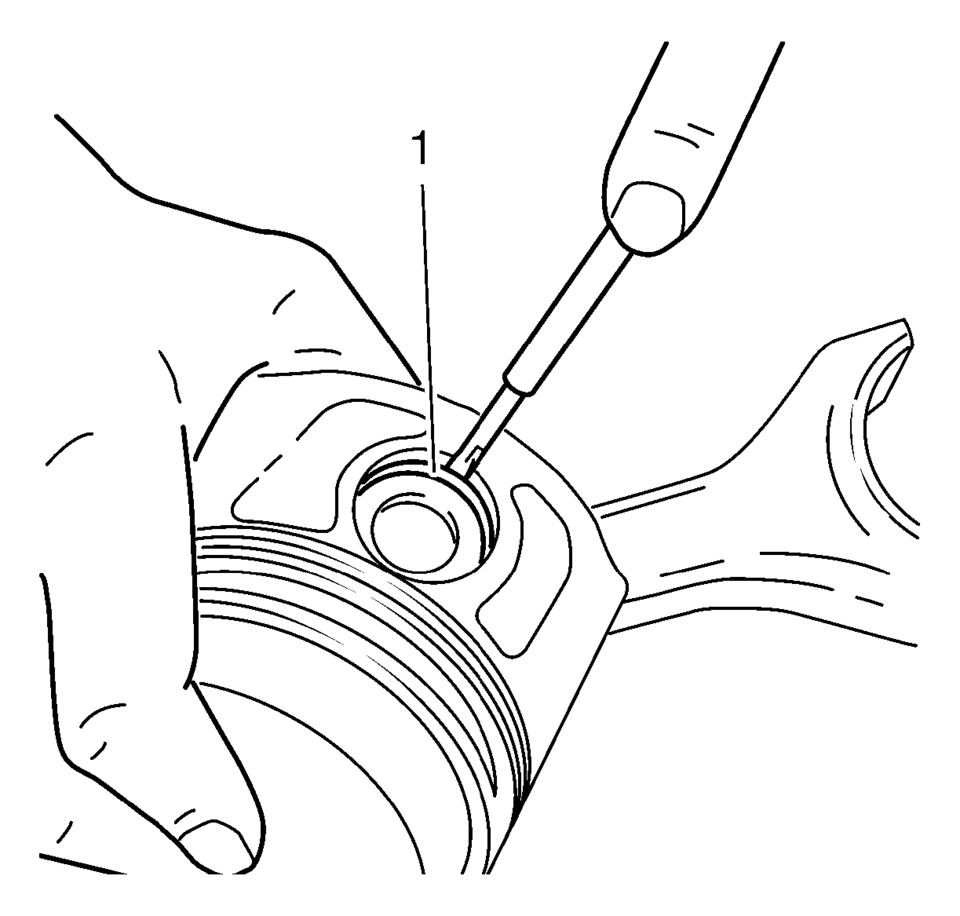
- Remove the retainer (1) from the piston eye.
- Press the piston pin out of the piston.
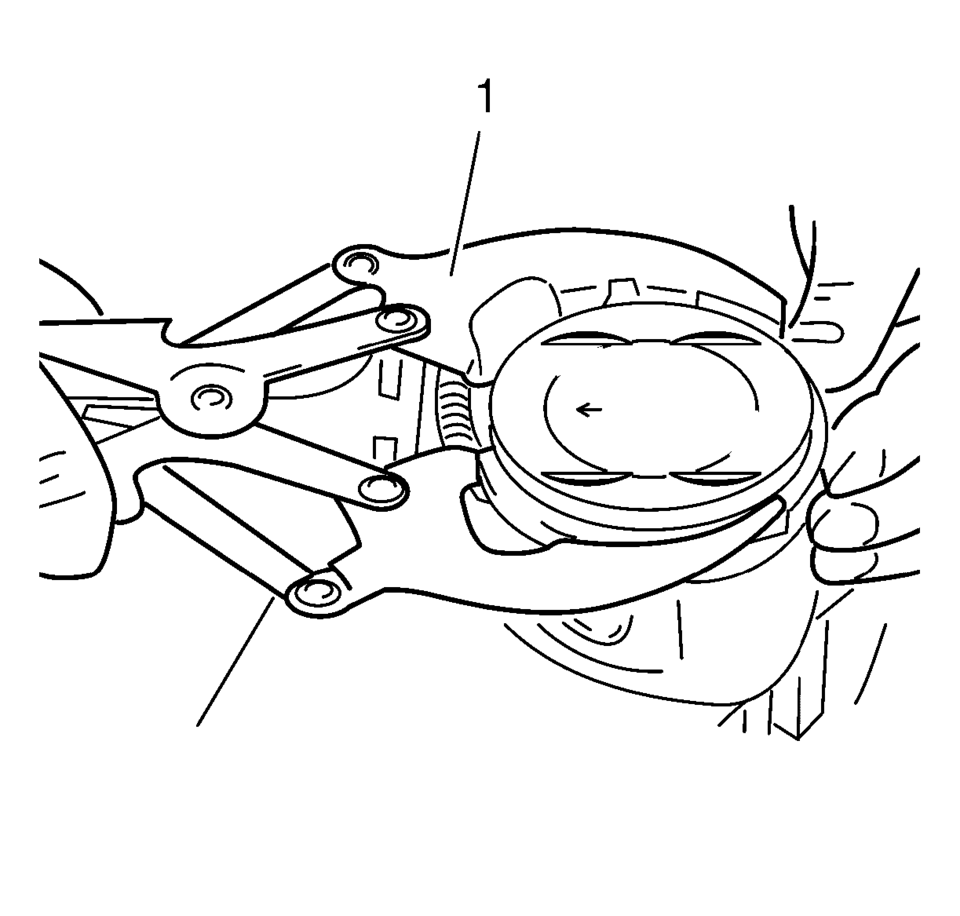
- Remove the piston rings, using piston ring pliers (1).
Remove oil carbon from the groove with a split piston ring, filed to a wedge-shape.
- Measure the piston ring gap.
Note:
Note installation position of the piston in respect of the connection rod.
Note:
Do not damage the bore.
- Tension the piston ring in the cylinder and measure the gap with a feeler gauge.
- Permissible ring gap:
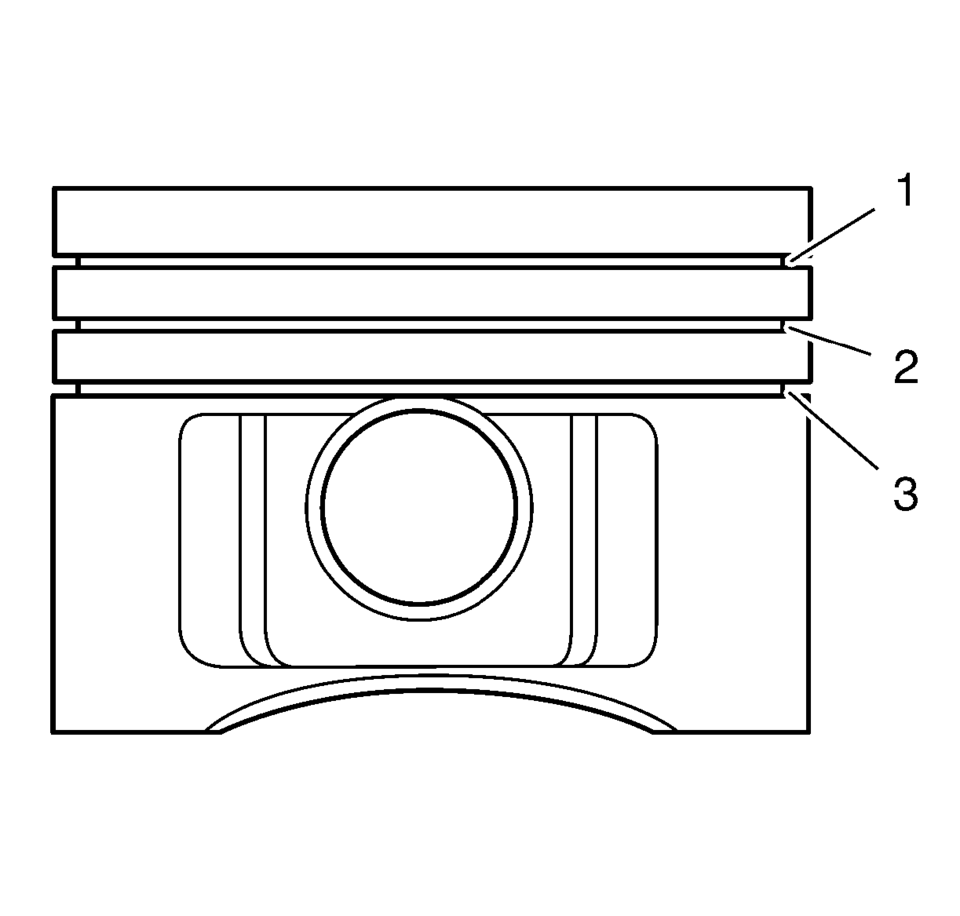
- Rectangular compression ring (1): 0.20-0.40 mm (0.007-0.015 in)
- Tapered compression ring (2): 0.40-0.60 mm (0.015-0.023 in)
- Oil scraper ring (3): 0.25-0.75 mm (0.009-0.029 in)
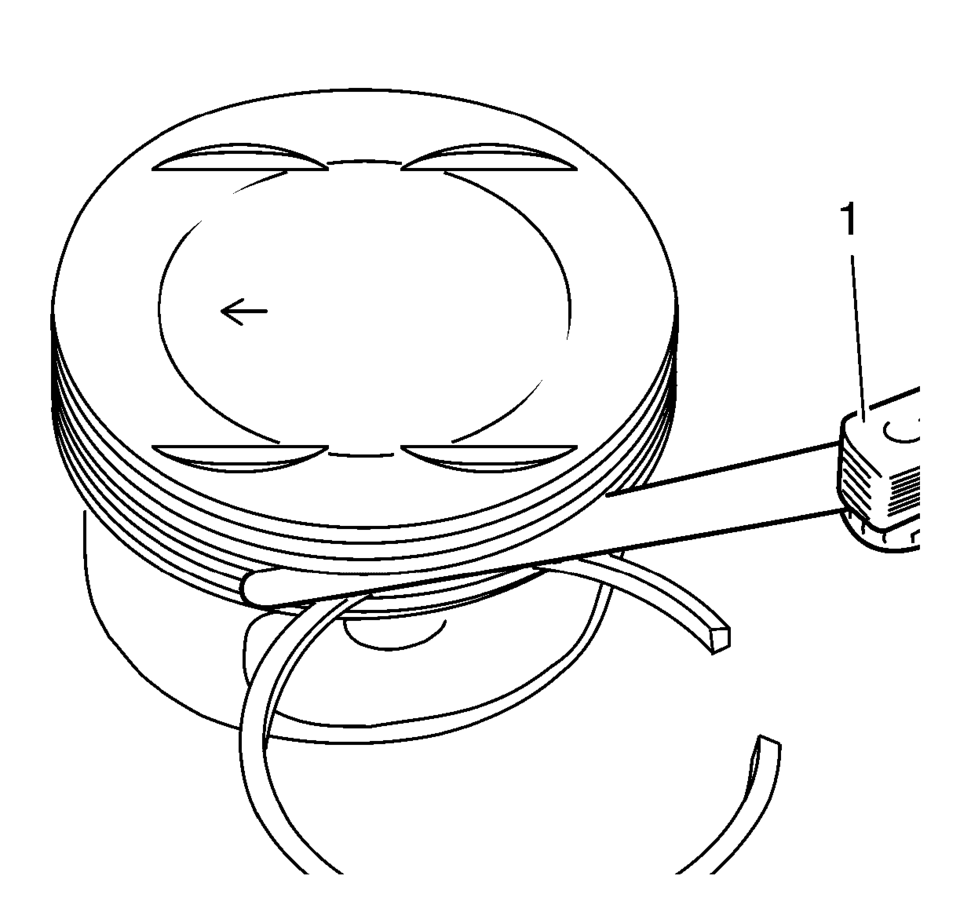
Permissible vertical play:
- Rectangular compression ring (1): 0.04-0.08 mm (0.001-0.003 in)
- Tapered compression ring (2): 0.03-0.07 mm (0.001-0.002 in)
- Oil scraper ring (3): 0.03-0.13 mm (0.001-0.005 in)
 Piston and Connecting Rod Assemble
Special Tools
EN-49941 Remover / Installer Piston Retainer Ring
For equivalent regional tools, refer to Special Tools.
Note: Lubricate the piston pin with clean engine oil.
In ...
 Piston, Connecting Rod, and Bearing Cleaning and Inspection
Special Tools
EN-470-B Angular Torque Wrench
For equivalent regional tools, refer to Special Tools.
Visual Inspection And Cleaning Procedure
Connecting Rod
Warning: Wear safety gla ...
Other materials:
Front Bumper Impact Bar Replacement
Removal Procedure
Warning: Refer to Approved Equipment for Collision Repair
Warning.
Disable the SIR system. Refer to SIR Disabling and Enabling.
Disconnect the negative battery cable. Refer to Battery Negative Cable
Disconnection and Connection.
Remove all ...
Intake Manifold Disassemble (1.6L LDE)
Remove the intake manifold absolute pressure sensor bolt.
Remove the manifold absolute pressure sensor (1) from the intake manifold (2).
Remove the intake manifold mount (2) from the intake manifold (1).
Remove the throttle body seal (1). ...
Driving recorder system interface
Touch "
"
on the Launch Bar to access the applications menu.
Select the "Dash Cam" key to open the Nissan Armada driving recorder interface.
The "Dash Cam" shortcut can also be configured within the home screen of the
Nissan Armada touchscreen display for quicker ...

0.0072